
RIPE Atlas Khipu
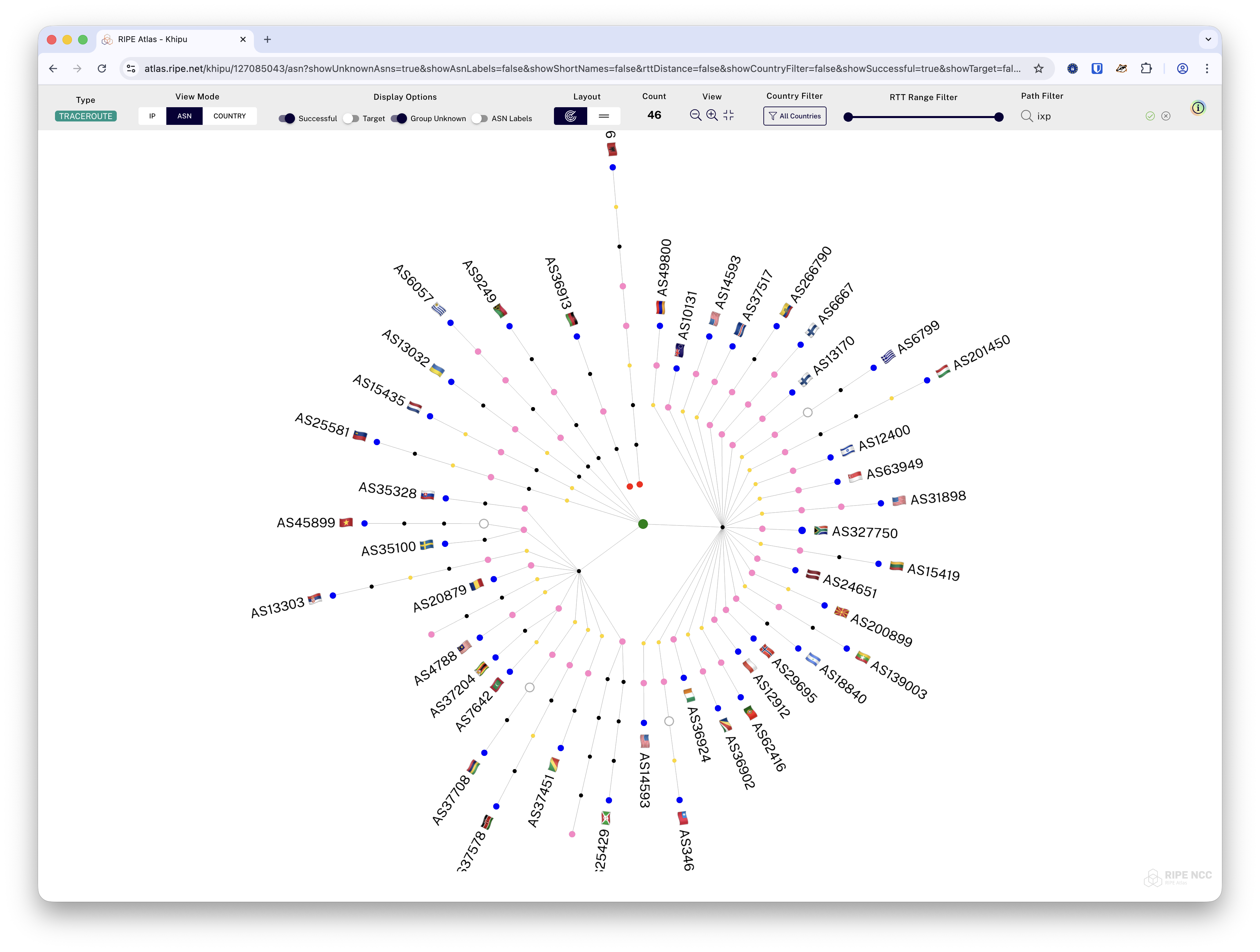
ASN view — radial layout
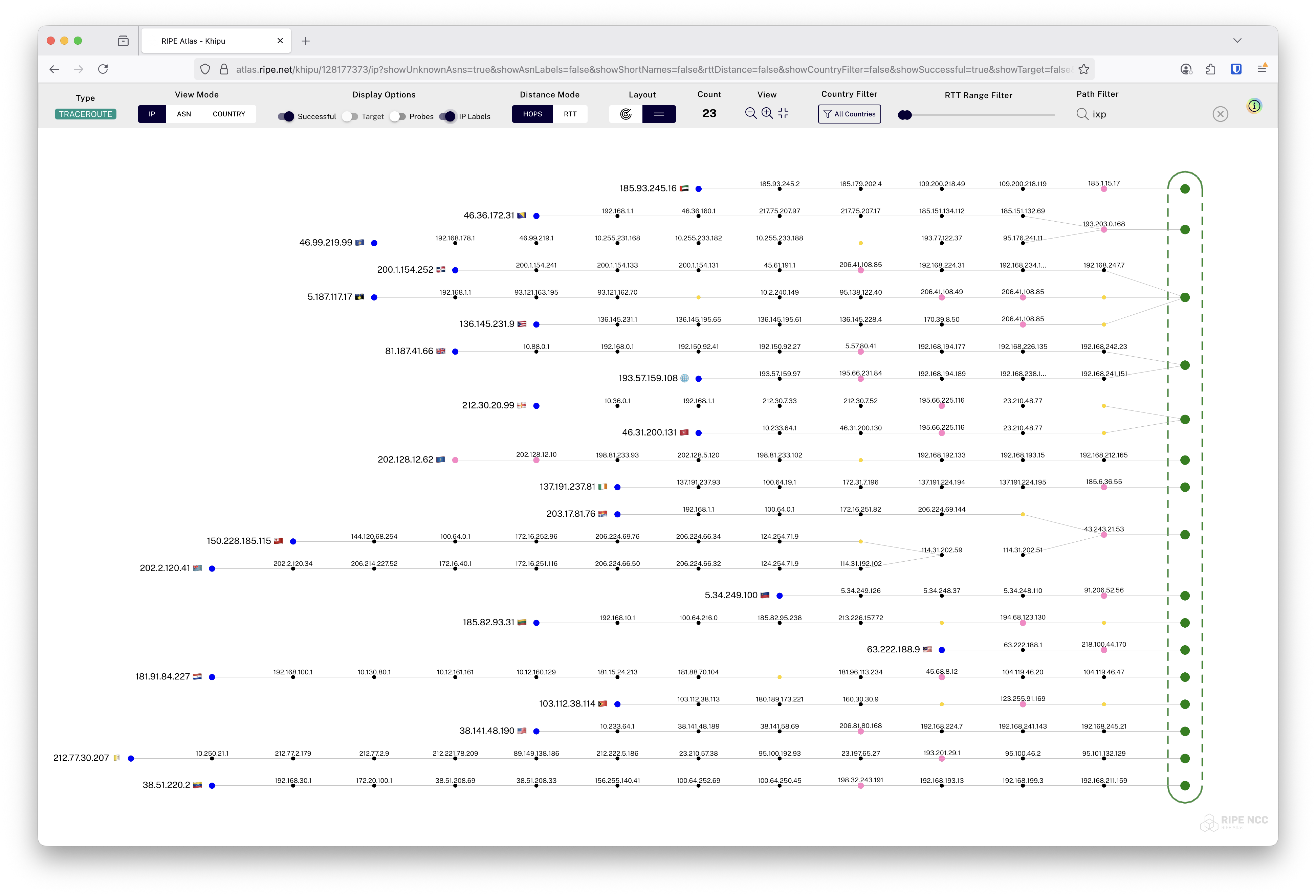
IP view — horizontal layout
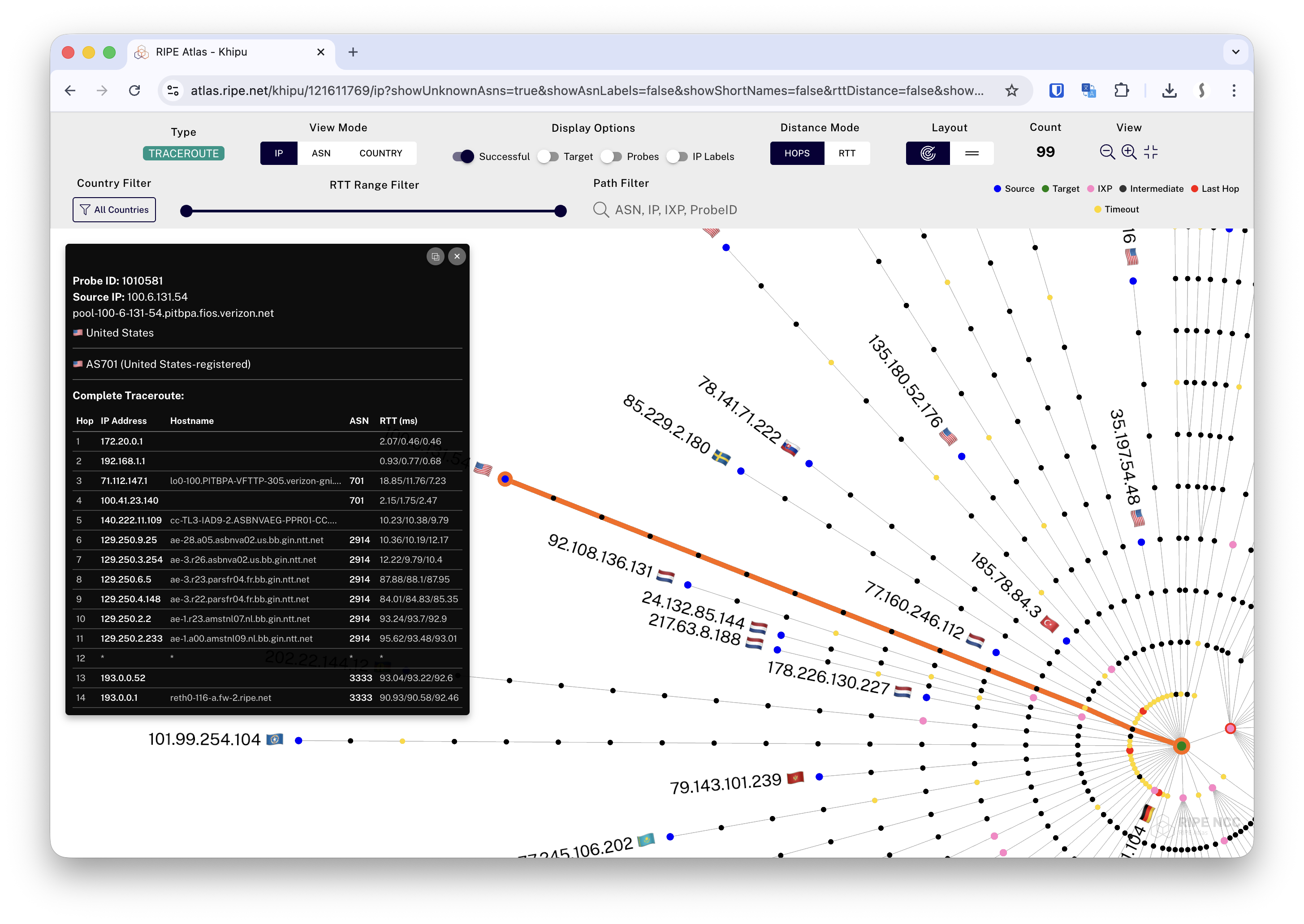
IP view with probe detail popup
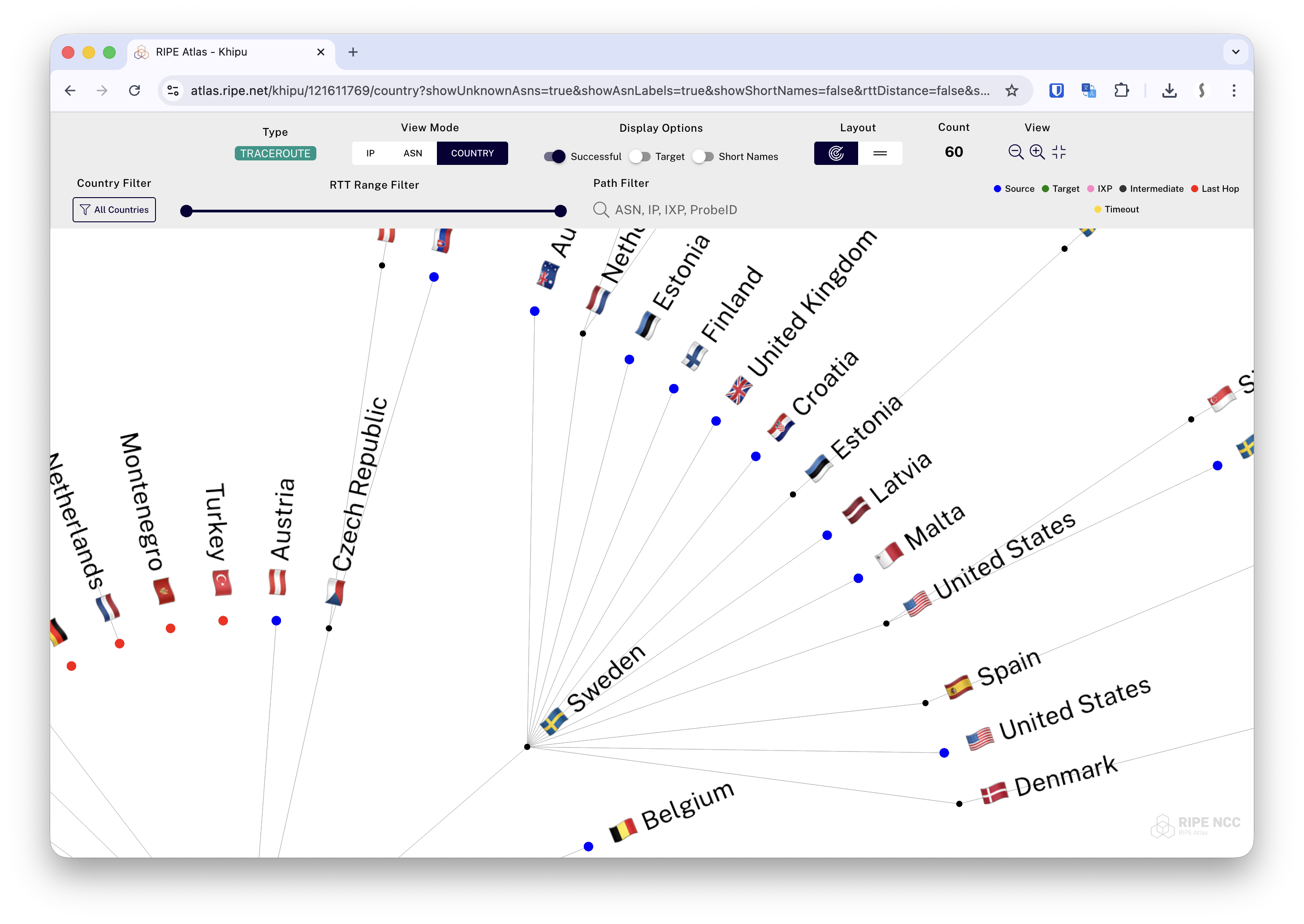
Country view
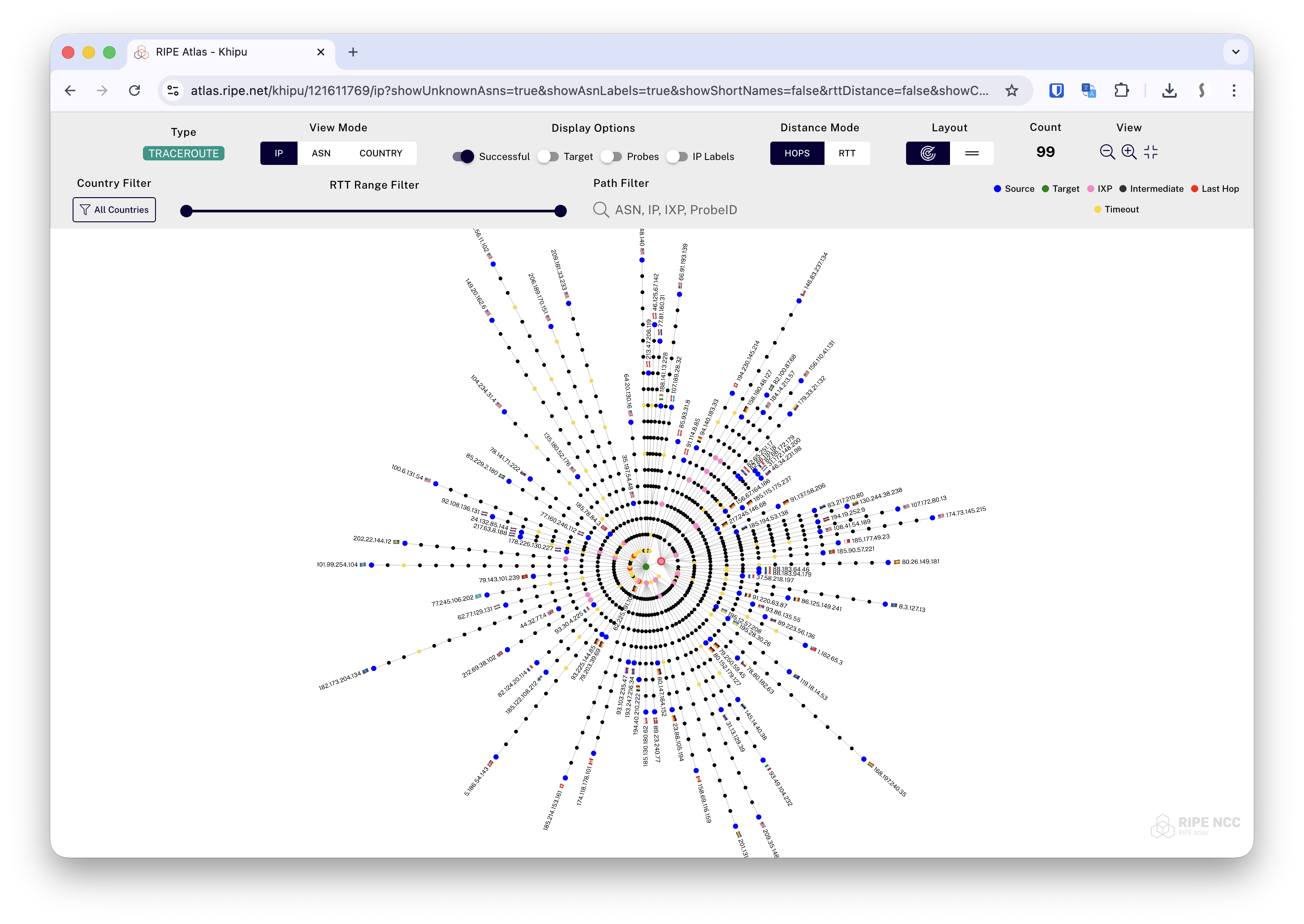
Radial layout with RTT distance rings
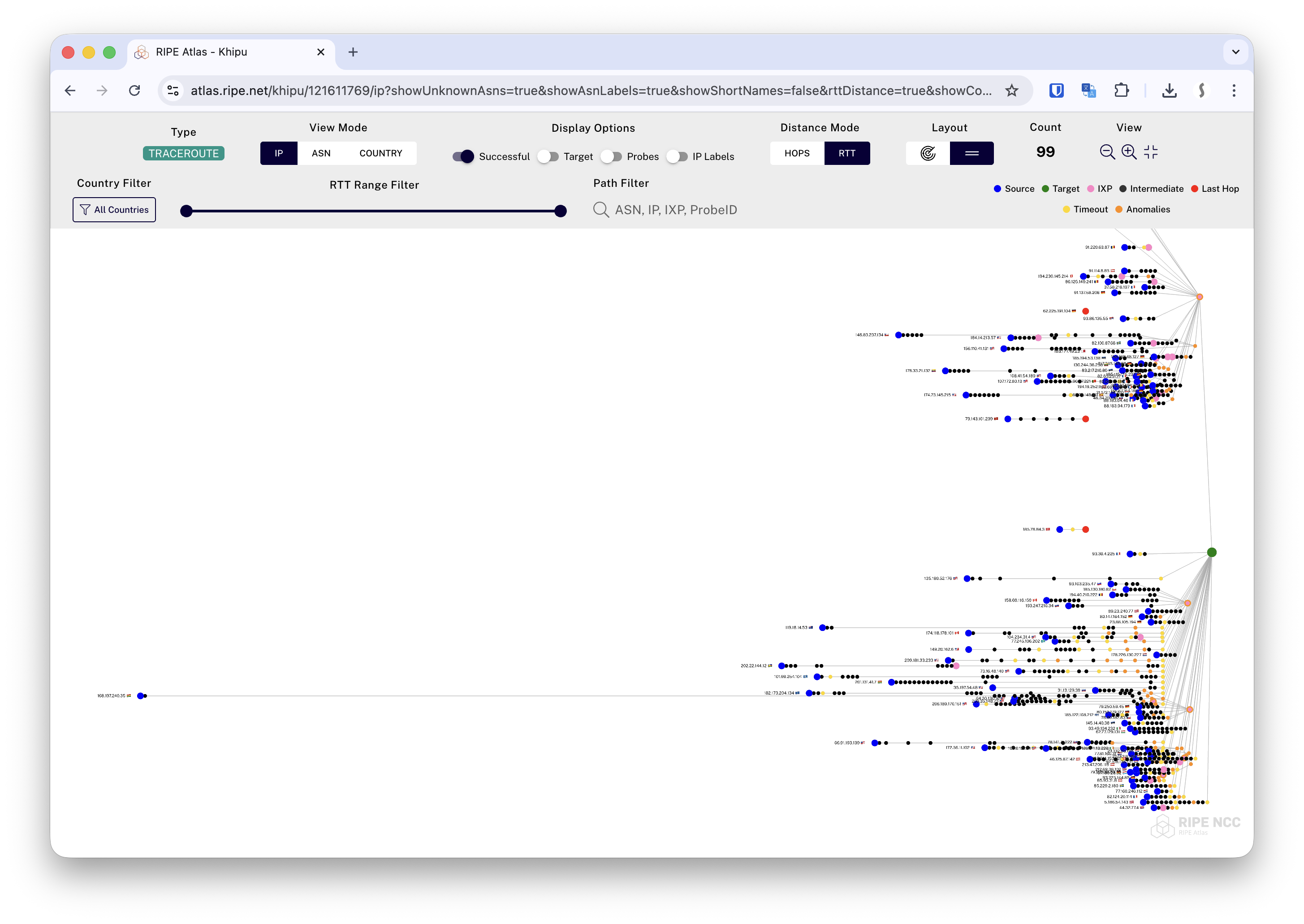
RTT distance mode — horizontal
Client
RIPE NCC
Tools
Vue.js, WebGL, JavaScript
URLs
Project Description
Interpreting traceroute data at scale is a real challenge. A single RIPE Atlas measurement can generate a large number of traceroutes from probes worldwide, each containing multiple hops through different routers and networks. Not all traceroutes succeed; some fail at intermediate points, creating incomplete paths. Understanding patterns requires grouping related paths while preserving important details. Using text-based traceroute output quickly becomes overwhelming when analysing multiple paths.
RIPE Atlas already had helpful measurement pages with mapped overviews and sortable results lists, and an older tool called TraceMON that could visualise some routes. But I felt it was still too challenging to compare the full collection of routes and get a clear visual overview. I built Khipu (named after the Incan knotted-cord record-keeping devices it visually resembles) to address this: an interactive, graphical tool that brings large amounts of traceroute data together in one place.
The tool renders traceroute paths as a tree with the destination at the centre and source probes at the edges. Users can explore the data at three levels of abstraction: individual IP addresses (hop-by-hop detail), Autonomous System Numbers (network-level topology and peering relationships), or countries (geographic routing patterns). Filtering by RTT range, path elements, country, IXP, or probe ID lets users isolate exactly the traffic they care about.
Use cases
Network engineers and researchers use Khipu to localize outages, identify where latency spikes occur, validate that traffic flows through intended peering partners, verify DNS resolution across regions, spot single points of failure, and explore IXP connectivity.
Key technical challenges
- WebGL rendering: large measurements can produce thousands of nodes; hardware-accelerated rendering keeps pan, zoom, and filtering interactions fluid
- Multiple data enrichment sources: each node is enriched in real-time with geolocation (IPLocate), IXP detection (PeeringDB), and ASN/location mapping (RIPE Registry and RIS)
- Integrated into the Atlas frontend: built as part of the Vue-based RIPE Atlas UI, with URL-based sharing so filtered views can be linked directly